
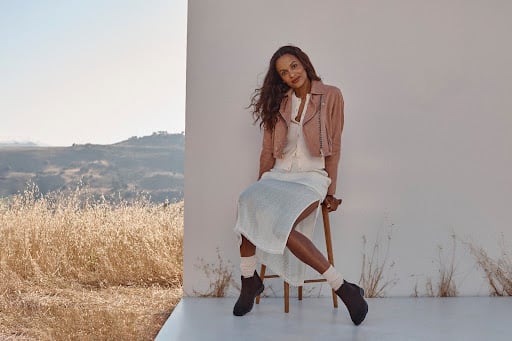
Whether you’re preparing for date night or drinks with coworkers, you need to dress to impress. And, for an evening on the town, you can’t go wrong with business casual—it’s the perfect mix of classy and comfy. However, the footwear component of this equation may cause a bit of a dilemma. Are boots business casual?
In short, yes, they can be. The difference between fashion and faux pax depends entirely on the kind of boot you choose and how well it gels with your ensemble.
Hiking boots for example are an unequivocal fashion no—these are more at home on a mountain trail than in an urban setting. Heritage boots can work provided they aren’t too scuffed or worn out.
The quintessential leather dress boot? Now, we’re talking.
Fellow style enthusiasts, it’s time to pull up those socks and fasten your laces. We’re about to embark on a sartorial journey down the less-traveled path of business casual footwear. So, if you’re looking to learn how to style business casual boots, you have come to the right place.
What Is Business Casual?
One of the major issues with how to style your footwear for business casual attire is the lack of a universal definition. So, before we can begin classifying certain boots as business casual and others as not, let’s attempt to establish a working definition.
Business casual is a dress code that falls between traditional business and formal wear—such as suits, ties, and dress shoes—and the informality of casual, off-duty attire. It aims to achieve a professional and sophisticated look that would be suitable both in a boardroom and at a weekend brunch.
As the Street notes, “Business casual dressing is more about avoiding a list of ‘don’ts’ than following a list of ‘dos.’”1 And that may vary slightly depending on style, preference, and gender.
Generally speaking, for men, business casual typically excludes jeans, shorts, and sandals, while an optional tie may be included. As for the variation of boot, only specific types may be considered appropriate. However, it’s important to note that the distinction between what is and isn’t business casual can be somewhat ambiguous.
Wearing a pair of black jeans, a plain gray or white shirt, a well-fitting blazer, and a quality pair of comfortable men’s boots or women’s boots could easily fall within the realm of business casual. It all depends on styling, fit, and overall presentation when it comes to your business casual wardrobe.
What Makes a Boot Business Casual Appropriate?
Though not limited to men’s boot styles, the Gentleman’s Playbook assembled a helpful list of features and rules that allow most boot styles to qualify as business casual friendly. They include:2
- Primary material is leather – A key criterion for business casual boots is that they should typically be made of high quality leather. Leather exudes a timeless sophisticated look that aligns well with most professional attire and adds a touch of elegance to the overall ensemble. Common types of high quality leather include:
-
-
-
- Calfskin
- Patent leather
- Suede
- Nubuck
- Shell cordovan
- Cowhide
- Ostriche
- Alligator
- Artificial leather
-
-
- Neutral toned laces – Some boot styles have laces. And when it comes to laces, you want to lean toward neutral-colors—such as brown, tan, or black—that complement the color of the boot without drawing excessive attention.
- Metal lace eyelets – For a subtle additional touch of polish and refinement, shop for boots with metal lace eyelets. They add a small dash of sophistication that elevates the boot’s overall aesthetic.
- Neutral/Natural color leather (shades of brown or black) – Although splashy colors have become more stylish as of late, even so, the leather’s color will play a key role in determining the smart casual appropriateness of the boots. Generally speaking, you should stick to neutral or natural shades of brown, black, gray, or dark blue as these colors are versatile and blend well with various outfits. If you’re looking for a neutral pair of men’s boots, our Danfield Lace Up Boot is the perfect example and can be dressed up or down for any occasion.
- Sleek/Slimmer profile – Opt for boots with a sleeker or slimmer profile and silhouette to maintain a more refined and sophisticated style. Avoid overly chunky or bulky styles, which often lean more towards casual or rugged aesthetics. Our women’s Vynn Heeled Ankle Bootie is the perfect option if you’re looking for a classic, sophisticated, and simple boot style that complements any work ensemble.
- Clean, not dirty – No matter the boot style, cleanliness is an essential element of a professional appearance. Before you go out, make sure that your boots are clean and relatively scuff-free. If they’re not, consider giving them a thorough cleaning and conditioning before you hit the town. If you go for leather, learn how to polish your boots so they remain shiny and beautiful all season long. At Vionic, we’ve compiled guidelines for leather boot care and suede boot care so you can step into your boots feeling confident and polished.
What Makes a Boot Not Business Casual
Similarly, some features will disqualify most types of boots from the smart casual conversation. For instance, you should avoid boots with the following characteristics:
- Wide round or square toe shapes – Boots with wide round or square toe shapes—think the classic Timberland-style boots—tend to lean more towards a casual or rugged aesthetic. These toe shapes are often associated with outdoor or work boots, which may appear too informal for a business casual setting. If you’re looking for boots with more room and style, consider our wide-calf boots for women as part of our wide-width size shoe collection, which offers both comfort and versatility.
- Rubber as the primary material – Boots made primarily of rubber—like rain boots or galoshes—are designed for specific purposes such as protection from wet weather or job site safety. Unless it’s pouring rain, rubber material will almost always be unsuitable for professional settings.
- Faux leather as primary material – As a general note, you should typically avoid boots made from faux leather materials. That said, this is not a hard and fast rule. Undoubtedly, some faux leather boots are indistinguishable from genuine leather. However, given the choice between two options, you should almost always favor genuine leather.
- Bright colors – Once more, rules of business casual can be broken. A pop of color can be incorporated tastefully into an outfit, however, overly vibrant or flashy boot hues can undermine a professional look by bringing far too much attention to your footwear.
- Dirty boots – If you have boots that are visibly scuffed or dirty, leave them at home unless you plan to clean them. Even then, too much wear or tear can take away from the overall aesthetic.
- Hiking boots – Hiking boots are perfect for a rugged trail and a jaunt through nature. But the chunky soles, heavy construction, and distinct outdoor aesthetic doesn’t fit in well with a business casual dress code.
Types of Business Casual Boots
With these general style tips in mind, you can start shopping for your next pair of business casual boots. As you do, look for the following styles:
Ankle Dress Boots
Ankle dress boots are a versatile and popular choice for business casual attire. As the name implies, they’re essentially a dress shoe with a boot shaft. They typically feature a slim profile, leather construction, and a height that falls just above or around the ankle. These ankle boots offer a polished and refined look while providing the flexibility to pair them with both trousers and jeans or dresses and skirts. The Savannah Heeled Ankle Bootie is an excellent choice if you’re looking for a show that’s both water-resistant and incredibly stylish.
Oxford Derby Boots
Oxford derby boots combine the classic formal elements of Oxford dress shoes with the ruggedness and versatility of boots. Oxfords are known for closed lacing, a sleek silhouette, and a slightly higher ankle height.
Chukka Boots
A low-cut boot that finishes just above the ankle, Chukkas typically only have two or three lacing eyelets. Most chukkas will be made from leather or suede with a minimalist design and sleek silhouette. This low profile makes them an ideal business casual boot. The Men’s Uptown Chukka Boot delivers effortless style and comfort, making it a favorite for both workdays and weekends.
Wingtip Boots
Wingtip boots are known for their brogue detailing along the toe cap, side panels, and heel. These distinctive decorative perforations are an excellent choice if you want to add a touch of personality to your business casual outfit without resorting to bold colors.
Chelsea Boots
Chelsea boots are ankle-high laceless boots that have stretch elastic side panels so the boot can be slipped on and off. They typically come with a plain toe and low heel. A suede or leather Chelsea boot is ideal for a more relaxed business casual look. And, if you’re looking for more colors, Chelseas are often known as a more playful and stylish boot. However you choose to style Chelsea Boots, we are confident you will love their versatility.
Combat boots
Although combat boots are more commonly known for their rugged aesthetic, certain styles like the Catina Lace Up Boot can fit in for an edgier business casual attire, especially when paired with well-tailored trousers or dark jeans. As you search for combat boots, prioritize the pairs that are made of high-quality leather with a sleeker profile and minimal to no embellishments.
Tall Boots
Tall boots can absolutely be styled for a business casual setting, especially in colder seasons. The key is to opt for designs with a structured silhouette, minimal embellishments, and neutral colors like black, brown, or taupe. Styles like the Valora Tall Heeled Boot can pair well with midi skirts, dresses, or tucked-in trousers for a polished look. Avoid overly slouchy, embellished, or rugged versions, which may lean too casual or distract from a refined appearance.
Cowboy boots
While cowboy boots are traditionally associated with Western wear and rugged attire, they also can be incorporated into a business casual ensemble, especially if you live in the South. Here a slim silhouette is advisable, though you can go a little more crazy with the embellishments and the stitching. And, remember, these should be your going-out-dancing cowboy boots, not the ones you use when working or riding—that means they should be pristine.
Vionic—Your Source for Business Casual Boots
Business casual outfits with boots are all about styling and setting. As mentioned, there are no hard and fast rules for what business casual may be. And this lack of strict rules allows for some personal expression and creativity to bleed through your styling.
Need help shopping for your next pair of business casual boots?
At Vionic, we can act as both stylist and storefront. From expert fashion tips to a massive footwear catalog, we have you covered. Whether it’s our ankle dress boots, Chukkas, or Chelseas, all of our footwear with Vio-Motion™ technology is designed to perfectly balance fashion and comfort. We’re your source for business casual with boots.
So, if you want your feet to look great and feel even better, shop Vionic today.
Sources:
- Sraders, Anne. “What Is Business Casual Attire?” The Street. 6 January, 2022. https://www.thestreet.com/lifestyle/what-is-business-casual-14629494
- “Are Boots Business Casual.” The Gentleman’s Playbook. 21 May, 2022. https://www.thegentlemansplaybook.com/are-boots-business-casual/
Leave a Reply