
By: Priya Parthasarathy DPM: Partner at USFAS, practicing in Silver Spring, MD
I always emphasize in my practice that not all patients need custom orthotics right away. I usually trial over-the-counter inserts first to see if they benefit the patient, and then transition to custom orthotics for most foot conditions.

There are so many over-the-counter shoe inserts to choose from, depending on the shoe or activity type. It is important that you go with a reputable brand that has a good-quality product. Many good-quality shoes come with a supportive footbed; however, adding additional support can benefit your feet, as one size does not fit all.
How to Find the Right Orthotics for Your Feet
Make sure you know your foot type, which is pronated, neutral, and supinated, as well as your foot shape. Some insoles work best with certain foot types. It is important to purchase a few different types of orthotics and see what works best with your footwear and foot. Everything should meld together seamlessly. They work best in shoes with removable insoles to ensure adequate room for your feet. They can be trimmed down to fit your shoes. They DO NOT last forever. I cringe when patients return to my office years later with the same insoles I had recommended years ago. They have a shelf life of around 6-8 mos. or less with daily usage.
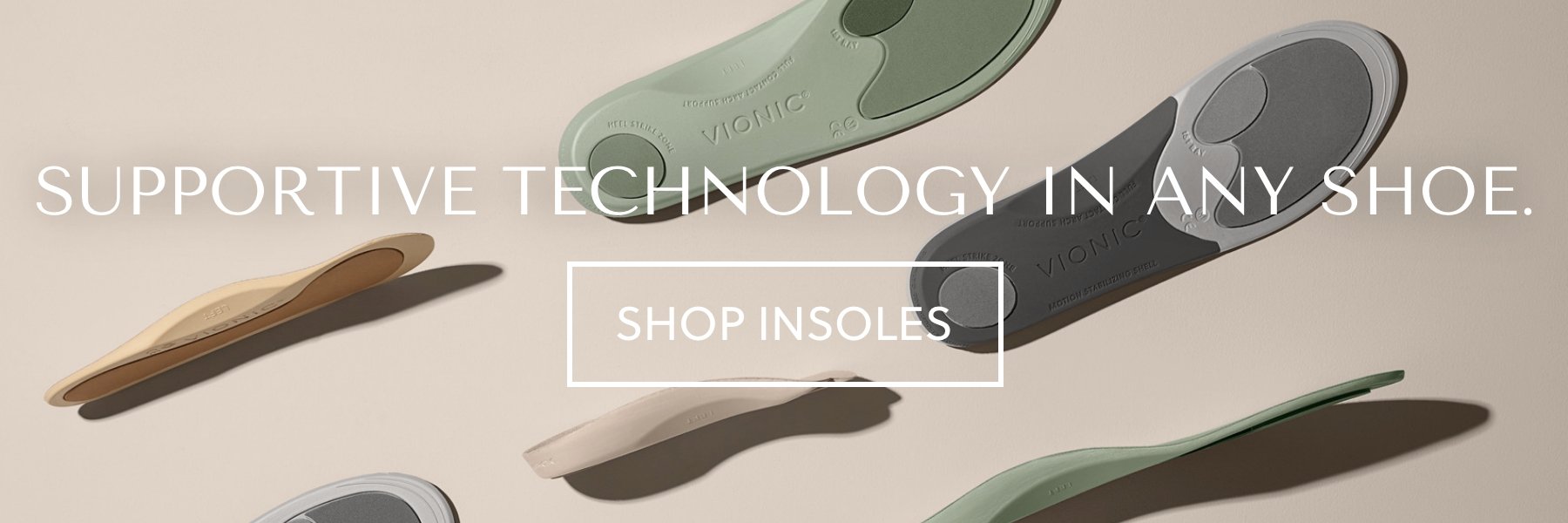
Vionic offers different types of inserts, which are activity-dependent. The Active full insole, Relief full insole, Relief 3qtr insole, and the Slim fit insole. They feature a lightweight, medium-density molded EVA base for maximum support and superior comfort. They also provide biomechanical Tri-Planar Motion control to help stabilize, support, and realign the feet back to their natural (neutral) position. It also features a heel and forefoot pad for increased shock absorption and energy return through the heel strike phase. They have all received the APMA seal of acceptance. The APMA Seal of Acceptance and Seal of Approval are granted to products found to promote good foot health by the American Podiatric Medical Association.
Tips for Choosing Shoe Inserts
- Check your shoes. I always say an insole does not make a bad shoe a good one. It all starts with a good foundation.
- It’s about comfort. One size does not fit all. Just like shoes, you should try various inserts to see how they feel on your foot.
- Remove the insert that comes with the shoe before inserting the insole. Putting the insole on top of the other can make shoes even more uncomfortable and possibly more painful. This is a common mistake I see over and over in my patients.
- If you are diabetic or have other high–risk conditions that affect your feet, see your doctor before purchasing insoles.
- If they do the job, great! If they don’t, or you want a long term option, then see a podiatrist.
The Importance of Finding the Right Insoles
Choosing the right orthotic doesn’t have to be complicated, but it does require attention to your foot type, lifestyle, and comfort. Over-the-counter inserts can offer excellent support for many people, especially when paired with quality men’s shoes and women’s footwear. Start with what feels right, monitor how your feet respond, and don’t be afraid to experiment. And if pain persists or you’re unsure where to start, consulting a board-certified podiatrist can ensure you’re taking the right steps toward long-term foot health. Your feet carry you every day. Investing in their support is always worth it. Explore Vionic’s footwear collection, featuring built-in Vio Motion technology, and give your feet the stable, supportive foundation they deserve.
Author:
Dr. Parthasarathy is a Partner at US Foot and Ankle Specialists (USFAS) and practices in the DMV area. Dr. Parthasarathy is the recent recipient of Podiatry Management’s Future Star Award in 2020. She is also the recipient of the American Podiatric Medical Association’s (APMA) prestigious Rising Star Award in 2017. She has been featured in the media including The New York Times, The Washington Post, Self Magazine, Women’s Running Magazine, NYMag and Prevention Magazine. She is currently Chair of the APMA Communications Committee and a member of the APMA Education Committee. Dr. Parthasarathy is an Editor for the Compendium of Podiatric Medicine and Surgery Publication. She serves on the Editorial Board of Advisors of the Podiatry Today publication. She is also President on the Maryland Podiatric Medical Associations Executive committee. Dr. Parthasarathy is the former Podiatry Section Chief at Medstar Montgomery Medical Center. She previously served on the Board of Directors of the American Board of Podiatric Medicine (ABPM) . She lectures frequently at National Conferences. She is board certified by the American Board of Podiatric Medicine.
Leave a Reply