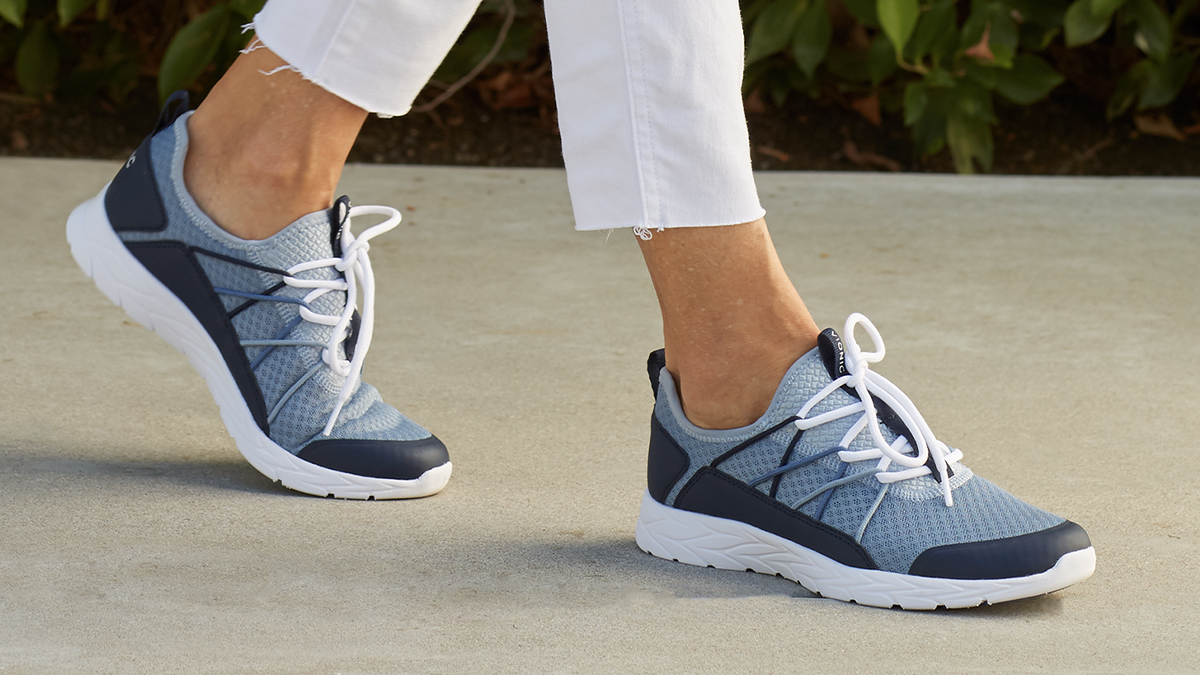

When you’re on the move, wearing the right type of athletic shoes is crucial for keeping your muscles, joints, and ligaments healthy and pain-free. While purchasing a standard pair of athletic shoes might work for those who exercise frequently or live a generally active lifestyle, not all active shoes are created equal.
Different workouts require your body to move in different ways. When it comes to walking exercises, are sneakers good for walking? Cross-training shoes and basketball shoes are designed to support side-to-side and up-and-down motions, whereas walking and running shoes support forward movements. And beyond that, there are distinct differences between a walking shoe and a running shoe.
If you’re a runner, frequent walker, or both, you might be wondering how to find the right sneakers to support foot health. The footwear experts at Vionic are here to provide some helpful insight in your quest for the perfect walking shoes for women or walking shoes for men. Read on for a deep dive into the walking shoe vs. running shoe discussion.
The Difference Between Running and Walking Shoes
Footwear made for walking and running promotes forward strides and repetitive heel-toe motions.¹ Additionally, they’re both usually a lightweight shoe with durable outsoles that last up to 500 miles.
So, what exactly is the difference between running and walking shoes? Keep reading to find out.
What Are Walking Shoes?
When you walk, your heel hits the ground before the ball of your foot. This heel-to-toe stepping motion requires your whole body weight to roll from back to front. Compared to trail running, high-intensity interval training, and other strenuous workouts, walking is a low-impact form of exercise. Though your weight shifts from front to back with each step, it distributes more evenly through your feet and legs.
Walking shoes and hiking shoes aren’t as light and breathable as a running shoe or cross-training shoe, but this is by design. A more structured silhouette and thicker soles provide stability and reduce the impact on your plantar fascia, ankles, and calves. Additionally, a walking sneaker offers substantial arch support, cushioning, and shock absorption to minimize stress on your joints and reduce overpronation.²
Compared to most other types of footwear, this comfortable shoe style hasn’t been around for very long. Dedicated walking shoes came to market in the mid-1980s, but it took a couple of decades for people to catch on to the benefits of this type of walking sneaker. Now that everyone has pedometers and step-tracking apps at their fingertips, walking sneakers are finally getting the love they deserve.
What to Look For in Walking Shoes
So, what should you look for in a good walking shoe? Generally speaking, walking shoes are made more for comfort than performance. This is because the act of walking isn’t just a workout—it’s also an essential function you rely on throughout the day. With that said, a proper pair with orthotic arch support, cushioned midsoles, stable heel counters, and shock-absorbing outsoles like the styles from Vionic will offer the most comfort.
When shopping for a good walking shoe, look for relatively thicker outsoles, breathable lining, and a contoured midsole that minimizes friction against your skin. We also recommend wide toe boxes to reduce cramping and blisters. Ultimately, walking sneakers should feel good on your feet whether you’re long distance speed walking, trekking uphill, or strolling through your neighborhood at an easy-breezy pace.

What Are Running Shoes?
When you jog, your heel probably hits the ground first, followed by the ball of your foot. But depending on how fast you’re going, you might land on your forefoot with each strike and then propel yourself forward without your heel ever touching the ground. Running is a high-impact form of exercise, especially the latter style.
Every time your foot hits the ground, your body absorbs as much as three times its weight. When you remain on the balls of your feet, your knees end up carrying the brunt of this impact. Additionally, running gets your heart rate up higher, making your entire body warmer, including your feet.
Running shoes are designed with this in mind. They’re made to accommodate various running styles, including heel-to-toe strides, midfoot strides, and toe strides. Trail running shoes and regular running sneakers are typically lighter than walking shoes with extra cushioning around the heel and toe areas. They also have lightweight and breathable uppers to allow airflow as your feet heat up, as well as soft, flexible soles for greater support.
What to Look For in Running Shoes
When shopping for a good running shoe, look for styles with breathable mesh uppers, neoprene, or another lightweight synthetic material. You’ll also want lightweight, adequately cushioned shoes that can also provide stability.
Walking vs. Running Shoes
According to the American Academy of Podiatric Sports Medicine (AAPSM), both walking and running shoes should provide stability and a smooth strike.³ As we mentioned, the primary differences between walking and running shoes have to do with weight, flexibility, and cushioning.
Another distinction is motion control. A running shoe will typically be designed for motion control, as it helps keep the foot in a neutral position. Since the rotation of your feet becomes more exaggerated with different running styles and speeds, a proper sneaker will keep it in place. This helps prevent shin splints, tendonitis, and other common foot problems.
Though many walking shoes you’ll find on the market don’t offer the same motion control as running sneakers, Vionic’s styles are a different story. Every pair has substantial stability, keeping your foot in the proper position with every step without affecting comfort or functionality.
Can You Wear Running Shoes for Walking?
A lot of people wonder if you can wear running shoes for walking. While running sneakers are designed specifically for running, they can work as walking sneakers for those who prefer a lighter style.⁴
That said, walking shoes are purpose-built for the unique mechanics of walking, especially the heel-to-toe stride most runners don’t rely on. They offer targeted cushioning, improved arch support, and more structured stability, helping reduce fatigue, improve posture, and support foot health over time.
So, while running shoes can work in a pinch, dedicated walking shoes are a better choice if you spend long hours on your feet or walk regularly for fitness or daily movement.
Learn the Vocab for Athletic Sneakers
When weighing your options for the most comfortable walking shoes or running sneakers, it can be helpful to know the various terms used to describe athletic footwear. Here’s a breakdown of some key vocab words.
- Strike: The strike (or drop) refers to the contact your foot makes with the ground with each stride. If a shoe’s description notes a smooth or soft foot strike, heel strike, or heel drop, it’s probably suitable for walking, jogging, or both.
- Overpronation: Overpronation is when your foot rolls inward as you run or walk. This puts significant pressure on your arches and foot ligaments, which can be extremely painful and cause mobility issues. Choosing a good running shoe or walking shoe can help prevent overpronation and potential foot injuries.
- Shock: Shock is the impact of fitness walking and running on your feet, ankles, knees, and hips. A shoe designed for shock absorption will reduce the impact on your body, helping to minimize discomfort and prevent injuries.
- Toe Box: In the anatomy of a shoe, the toe box is—you guessed it—the area surrounding your toes. It should be spacious in terms of both height and width, as cramped toes can lead to a range of foot problems.
- Midsoles: The midsole (or footbed) is the part of a shoe that lines up with the bottom of your foot. It should be contoured with arch support and heel cups while providing ample cushioning.
- Heel Counter: The heel counter is an insert in the back of a walking or running shoe that reinforces the heel cup, controls pronation, and enhances overall support.
Our Favorite Walking Shoe Styles from Vionic
If you’re exploring the walking vs. running shoes debate and need a pair built for daily movement, Vionic’s collection of walking shoes delivers style, support, and superior foot health benefits. Whether you’re into fitness walking, long walks through the neighborhood, or simply need a supportive walking shoe for everyday wear, we’ve got you covered.
Walk Max II Lace Up Sneaker: Designed with a thicker sole and motion control features, this style helps reduce heel impact while offering excellent stability. It’s ideal for walkers who need a reliable, cushioned walking shoe that holds up over long distances.
Walk Strider Knit Sneaker: This breathable, soft-flexible sneaker blends a sleek look with orthopedic-grade comfort. It’s a great walking shoe option for those seeking lightweight support and a roomy toe box to prevent discomfort and blisters.
23 Walk 2.0 Sneaker: A versatile and durable choice, the 23Walk 2.0 delivers smooth heel-to-toe transitions and all-day comfort with a contoured midsole—perfect for flat feet or anyone prioritizing foot care needs.
No matter your pace or path, the right shoe makes a difference. These styles combine thicker soles, arch support, and smart cushioning to meet your walking goals while keeping your feet happy, step after step.
Active Shoes for Men and Women from Vionic
If you take daily walks, walking shoes are the way to go. If you’re a jogger, trail runner, or distance runner, then running sneakers is your best bet. And if you do both, you might consider getting a pair of each. Not sure where to start when choosing between walking vs. running shoes? Vionic has an impressive selection of men’s and women’s walking shoes and active sneakers built with Vio Motion technology.
We carry lace-up walkers, as well as hook-and-loop strap styles. We’ve also got plenty of trainers, active sneakers, cross-training shoes, casual sneakers, and even tennis shoes made specifically for working on your feet. Aside from being supremely comfortable and supportive, our orthotic sneakers are totally stylish.
Shop our athletic shoe collections today! If you have any questions, we’re always here to help you find the exact right shoe.
SHOP WOMEN’S ACTIVE
SHOP MEN’S ACTIVE
Sources:
1.Maggie Spilner. “The Great Shoe Debate”. Prevention. Nov 3, 2011, https://www.prevention.com/fitness/fitness-tips/a20451350/differences-between-walking-and-running-sneakers/
2. “Footwear – Walking Shoes”. American Academy of Podiatric Sports Medicine. http://www.aapsm.org/walkingshoes.html
3. “Footwear – Running Shoe Anatomy”. American Academy of Podiatric Sports Medicine. http://www.aapsm.org/runshoe-running-anatomy.html
4. John Honerkamp. “Running Shoes vs. Walking Shoes”. Verywell Fit. Updated on July 17, 2019, https://www.verywellfit.com/running-shoes-vs-walking-shoes-3436331